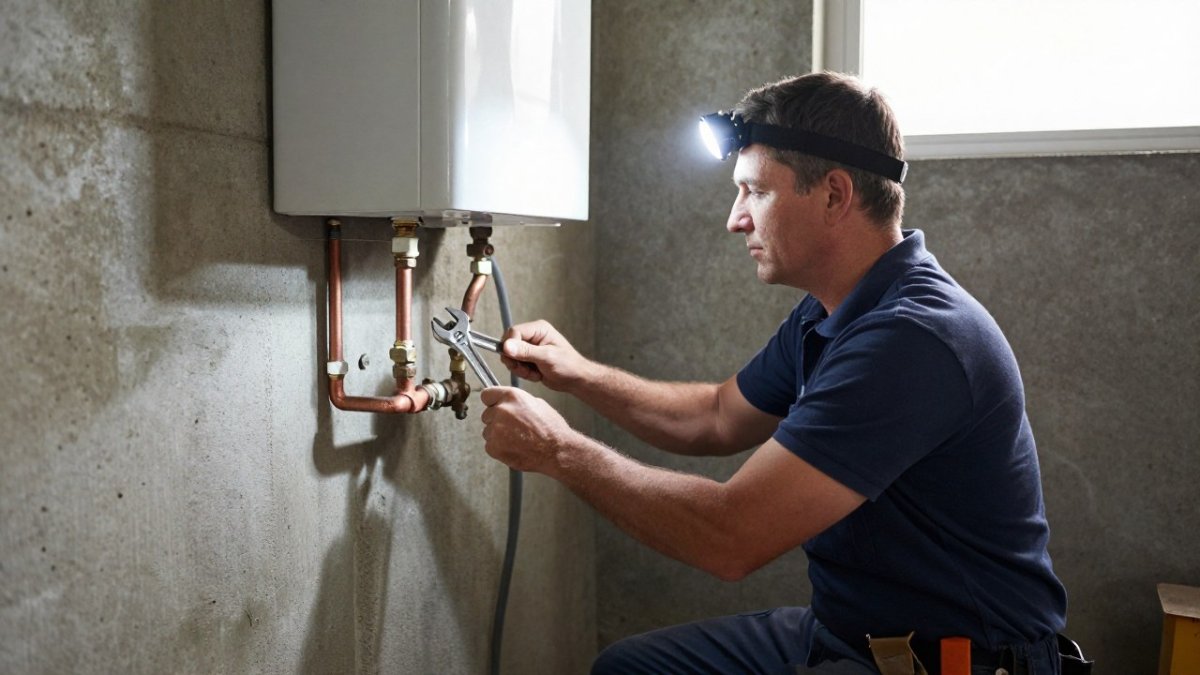
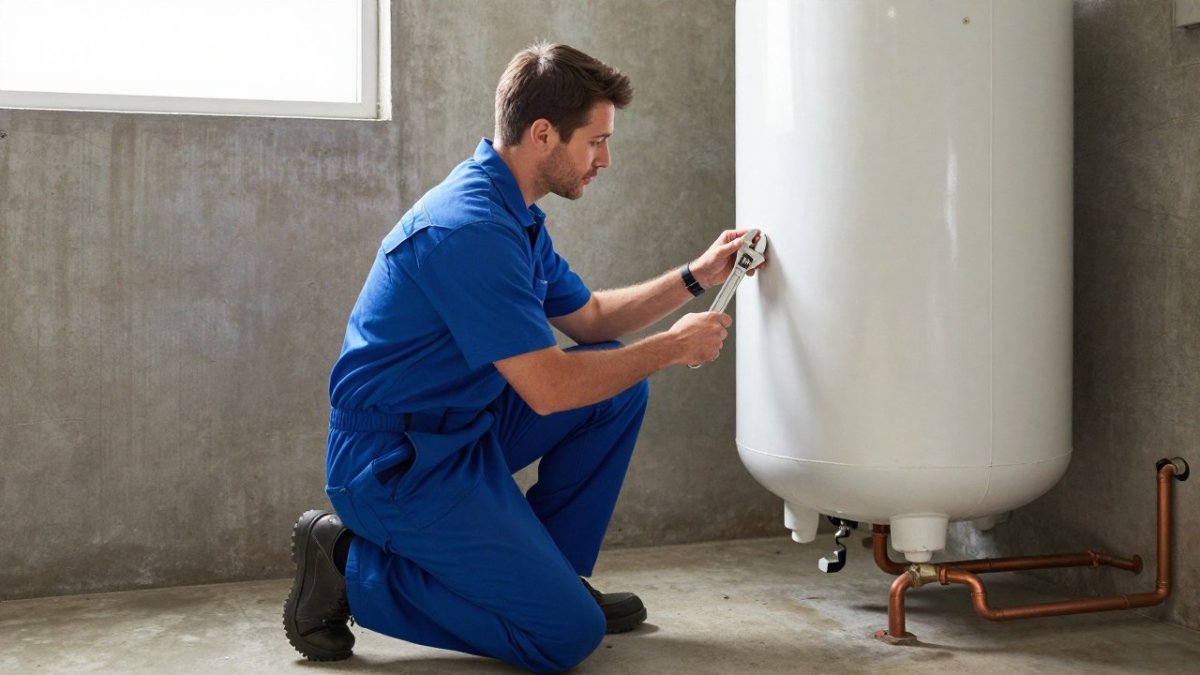
 Comparison
Tank vs Tankless Water Heater 2026: Which Fits Your Reno Home?
Last Updated: November 22, 2026
Quick Summary
The tank vs tankless decision in 2026 comes down to upfront cost versus space and continuous hot water. A storage tank costs less to install, while a tankless unit is compact and never runs dry. A 2026 comparison projects 20-year costs of $12,000-$18,000 for gas tankless versus $16,600-$23,300 for a standard tank with two replacements.
- Gas tankless installation typically runs $3,200-$5,800, compared with $1,400-$2,400 for a like-for-like gas tank installation.
- Tankless units are rated by flow rate in gallons per minute, with gas models commonly running 7-11 GPM.
- Reno's winter incoming water near 45°F can cut a tankless unit's rated flow by roughly a third.
- Tankless retrofits often need a larger gas line, new venting, and electrical work for controls.
- If calculator payback stretches past 10 years, a tank likely fits better; under 7 years, tankless starts to make sense.
Table of Contents
- Tank vs Tankless Water Heater 2026: The Short Answer
- How Storage Tanks and On-Demand Units Actually Work
- Tank vs Tankless Water Heater Cost in 2026
- Tankless Water Heater Energy Savings: What the Numbers Show
- Tankless Water Heater Lifespan and Service Life
- Sizing a System: Household Demand and Simultaneous Use
- Installation Realities: Venting, Gas Lines, and Retrofits
- Using a Tankless vs Tank Water Heater Calculator
- Frequently Asked Questions
Tank vs Tankless Water Heater 2026: The Short Answer
If you have ever stood in a cold shower because the tank ran dry, the tank vs tankless water heater question in 2026 comes down to this: a storage tank wins on upfront cost, while a tankless unit wins on space and continuous hot water.
At Reno Plumbing Doctor, we install and repair both types across Reno, Sparks, Verdi, and Lockwood. The right answer depends on household size, gas capacity, and how much hot water you use at once. Below, we break down how each system works, what installation really involves, and how to size a unit before you spend a dollar.
| Factor | Storage Tank | Tankless |
|---|---|---|
| Upfront cost | Lower | Higher |
| Hot water supply | Limited by tank size | Continuous |
| Space needed | Large closet or garage footprint | Wall-mounted, compact |
| Lifespan | Shorter, with tank replacement risk | Longer with proper maintenance |
| Best for | Low-use households, tight budgets | Larger households, simultaneous demand |
For a local summary of pros and cons, see tankless vs traditional water heater options in Reno.
How Storage Tanks and On-Demand Units Actually Work
A storage tank heats water in a insulated steel cylinder and holds it until you open a tap. A tankless unit heats water only as it flows through a heat exchanger, which is why it is called on-demand heating.
Stored Hot Water and Recovery Rate
Tanks are rated by first-hour rating, the gallons of hot water delivered in one hour starting with a full tank. Recovery rate is how fast the burner reheats the tank after use. A 50-gallon tank with a strong recovery rate may deliver 70-80 gallons in that first hour, which covers most morning routines.
The catch is simple: use it all and you wait. A common mistake is buying a tank based on gallon capacity alone. The first-hour rating matters more for a family with two showers and a dishwasher running at once.
Continuous Hot Water and Flow Rate
Tankless units are rated by flow rate in gallons per minute. Gas models commonly run 7-11 GPM, enough for two showers or a shower plus a sink. Add a third fixture and the unit may throttle back, so the water cools.
That is the trade-off nobody mentions: endless hot water has a ceiling, and the ceiling is your flow rate.
Tank vs Tankless Water Heater Cost in 2026
Upfront cost is where the two systems separate fastest. A 2026 cost guide from Better Home Help 24 installation cost estimates lists typical gas tankless installation at $3,200-$5,800, compared with $1,400-$2,400 for a like-for-like gas tank installation.
The gap is not the equipment alone. Tankless retrofits often need a larger gas line, new venting, and electrical work for controls. Those items add labor and materials that a straight tank swap skips.
Over time, the math flips. The 2026 lifecycle estimate of $4,600-$8,000 in tankless savings assumes the tankless unit lasts longer and avoids one or two tank replacements. Whether that holds depends on water quality and maintenance, which we cover below.
Tankless Water Heater Energy Savings: What the Numbers Show
Tankless water heater energy savings come from eliminating standby heat loss. A tank keeps water hot around the clock, even when nobody is home. A tankless unit only fires when a tap opens.
The savings are real but smaller than most sales pitches suggest. Households with low hot-water use may see modest gains, because the tankless unit still has higher upfront cost to recover.
Reno's hard water also matters. Mineral buildup on a tankless heat exchanger cuts efficiency over time, so annual descaling protects the savings you bought. For the local breakdown of how tankless cuts bills in Reno, see tankless water heater energy savings.
Tankless Water Heater Lifespan and Service Life
Tankless water heater lifespan typically runs longer than a tank's, but only with maintenance. Tank and tankless units have different service lives, and regular descaling and correct installation affect how long a tankless unit lasts.
Hard water is the deciding factor. Reno-area water carries dissolved minerals that collect on the heat exchanger. Skip descaling and the unit works harder, cycles more often, and eventually fails early. That erases the lifecycle savings in the 2026 comparison.
If your current heater is old but still running, weigh repair against replacement honestly. Our guide to whether replacing an old water heater is worth it walks through the four factors that decide it.
Sizing a System: Household Demand and Simultaneous Use
Sizing is where most buying mistakes happen, and it is the one topic where a Reno-specific answer beats a generic national guide. A tank is sized by household size and peak-hour demand. A tankless unit is sized by simultaneous demand, meaning how many fixtures run at once and how cold the incoming water is. In Reno, winter incoming water can run in the 40s Fahrenheit, which raises the temperature rise a tankless unit must deliver and effectively reduces its usable flow rate.
Tank Sizing: First-Hour Rating, Not Just Gallons
Tanks are rated by first-hour rating (FHR), the gallons of hot water delivered in one hour starting with a full tank. A 50-gallon tank with a strong recovery rate may deliver 70-80 gallons in that first hour. Size by peak hour, not by tank gallons alone. A common pattern is a family of four with two showers and a dishwasher running between 7 and 8 a.m. needing an FHR in the 70-80 gallon range, which often points to a 50-gallon tank with a high recovery burner or a 75-gallon tank in gas.
Tankless Sizing: Flow Rate and Temperature Rise
Tankless units are rated by flow rate in gallons per minute at a specified temperature rise. Gas models commonly run 7-11 GPM at a 35-45°F rise, but usable flow drops as the required rise increases. In Reno, a winter incoming temperature near 45°F and a target shower temperature near 110°F means a rise of about 65°F, which can cut a unit's rated flow by roughly a third compared with a warm-climate rating. That is why a unit advertised at 9 GPM may only deliver about 6 GPM in a Reno January.
Worked Examples
- Two people, one bathroom, small home: one shower (about 2.0 GPM) plus a kitchen sink (about 1.5 GPM) run together occasionally. A tankless unit rated around 5-6 GPM at the local temperature rise is usually sufficient, and a 40-gallon tank with a strong FHR also works.
- Family of four, two bathrooms, dishwasher at 7 a.m.: two showers (about 4.0 GPM combined) plus a dishwasher (about 1.5 GPM) plus a bathroom sink (about 1.0 GPM) can peak near 6.5 GPM. At a Reno winter rise, that points to a tankless unit rated around 9-10 GPM at a 35°F rise, or a 50-gallon tank with an FHR near 75 gallons.
- Three bathrooms with simultaneous morning use: peak demand can exceed 8-9 GPM. A single tankless unit may throttle, so a larger unit, a condensing model with a higher flow rating, or a storage tank with a high FHR is the practical answer.
Reno-Specific Sizing Factors
- Incoming water temperature: winter groundwater in the Reno area is cold enough to reduce tankless usable flow; size for January, not July.
- Water hardness: Reno-area water carries dissolved minerals that collect on tankless heat exchangers, so a water softener or a descaling schedule protects the flow rating you paid for.
- Altitude: Reno sits near 4,500 feet, and some gas appliances are derated at altitude; confirm the unit is rated for the elevation before purchase.
- Gas meter capacity: confirm the meter and line can deliver the unit's Btu input at peak, which ties back to the installation section above.
Use this checklist before you shop:
- Count showers, sinks, and appliances used in the busiest hour
- Add the flow rates of fixtures likely to run together
- Check incoming water temperature in winter, which raises the temperature rise
- Confirm gas line capacity at the meter
- Match the unit's flow rate to peak demand, not average use
- Confirm the model is rated for Reno's altitude
If you are unsure whether your current setup fits your demand, water heater repair in Reno, Nevada can help you evaluate both tank and tankless units before you replace anything.
Installation Realities: Venting, Gas Lines, and Retrofits
Installation is the hidden cost that decides the budget, and in Reno it is also where permits and local code come into play. A like-for-like tank swap is usually a same-day job: drain, disconnect, remove, set, reconnect, and test. A tankless conversion is a different project. It typically involves a gas-line upgrade, new venting, condensate management, electrical work for controls, and a permit and inspection.
Gas-Line Sizing and the Load Calculation
Tankless gas units draw far more Btu per hour than a storage tank because they heat water on demand. A common pattern is a tankless unit rated around 180,000-199,000 Btu/h, compared with roughly 40,000 Btu/h for a standard 40- or 50-gallon tank. If the existing gas line and meter cannot deliver that input, the unit short-cycles, fails to fire, or trips a pressure switch. A licensed installer runs a load calculation on the gas line and meter before quoting, and upsizing the line from the meter to the unit is often the single largest retrofit line item. Watch out: skipping the load calculation to save a few hundred dollars usually costs more later when the line has to be redone.
Venting and Combustion Air
Non-condensing tankless units typically vent through stainless steel Category III venting, while condensing models can use PVC or CPVC and produce acidic condensate that must be neutralized and drained. Clearances to windows, doors, and property lines matter, and in Reno's high-desert climate the vent termination must be placed to avoid snow accumulation and prevailing-wind downdrafts. A storage tank in a garage often vents through an existing flue; a wall-mounted tankless unit may need a new penetration through the wall or roof, which adds labor and flashing work.
Electrical, Condensate, and Placement
Most gas tankless units need a 120V circuit for controls and the igniter, and condensing models need a drain path for condensate. Placement matters: a unit mounted on an exterior wall in a freeze-prone area needs freeze protection, and Reno winters can drop well below freezing. Interior garage or utility-closet placement avoids that risk but may require additional venting length and combustion-air provisions.
Permits, Inspections, and Local Rules
Permit and inspection requirements for water heater work vary by jurisdiction, so confirm current requirements with the local building department before work begins. A licensed contractor pulls the permit, schedules the inspection, and provides the documentation that matters at resale. Unpermitted work can complicate a home sale and may void manufacturer warranties.
Utility and Tax Incentives
Incentives change annually, so confirm current programs before purchase. Utility rebates and tax incentives for water heaters change over time, so check current programs before you buy. Ask the installer for a written incentive summary tied to the specific model number.
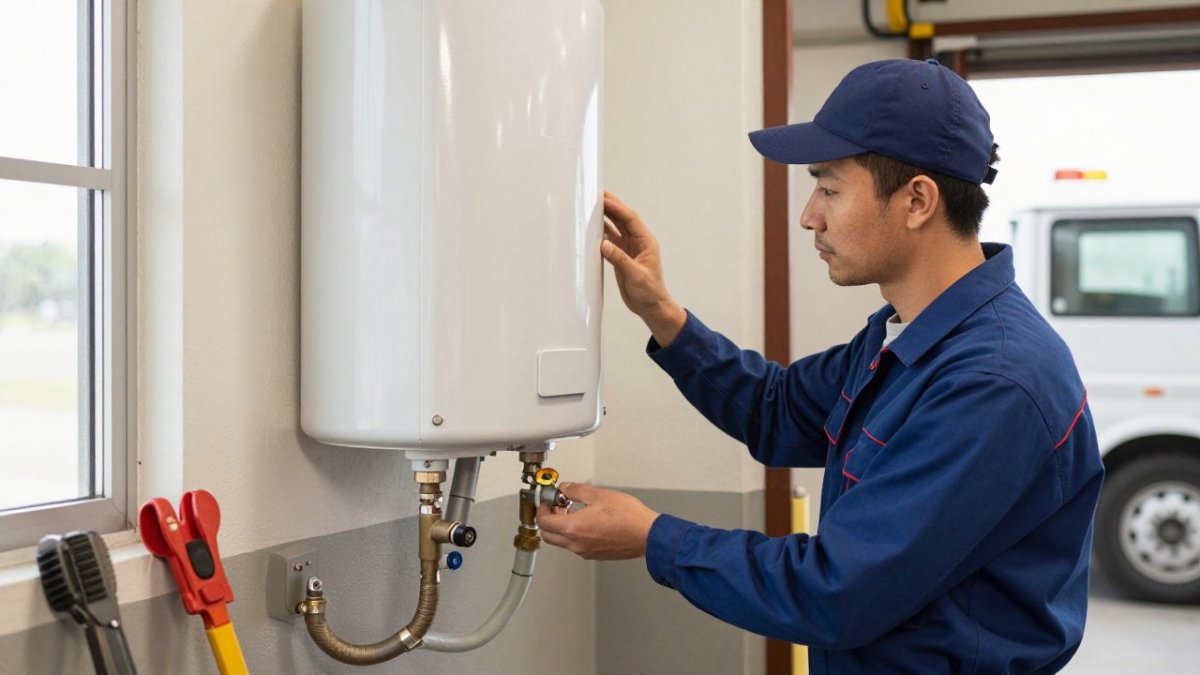
At Reno Plumbing Doctor, we use Up-Front Menu Pricing so you see exact costs before work begins, and our fully stocked trucks enable on-the-spot repairs. For installation details and scheduling, see water heater installation in Reno.
Using a Tankless vs Tank Water Heater Calculator
A tankless vs tank water heater calculator is a tool that estimates annual operating cost and payback by comparing fuel type, efficiency rating, and household hot-water use.
Gather these numbers first:
| Input | Where to Find It | Why It Matters |
|---|---|---|
| Uniform energy factor | Unit spec sheet | Compares efficiency fairly |
| Annual hot-water use | Utility bills or estimate | Drives operating cost |
| Local fuel rate | Gas or electric bill | Sets the dollar savings |
| Installed cost | Contractor quote | Determines payback period |
| Expected service life | Manufacturer spec | Spreads cost over years |
Run the calculator twice, once with your current habits and once with a realistic reduction. If payback stretches past 10 years, a tank likely fits better.
One more note for 2026: the U.S. Department of Energy has updated commercial water-heater efficiency standards scheduled to take effect on October 6, 2026, as summarized by American Water Heater's DOE regulations overview.
The short answer still holds: tank for budget and low use, tankless for space and continuous supply. Match the system to your household demand, budget for the retrofit, and maintain it.
Frequently Asked Questions
Why are some plumbers against tankless water heaters?
The pushback usually comes from installation constraints, not performance. Tankless units can need larger gas lines, upgraded venting, and a condensing setup to hit their rated efficiency, which adds labor and cost to a retrofit. In older Reno homes, that work can outweigh the space savings. Some plumbers also see more service calls on units that were undersized or never descaled. A tankless system works well when it is sized correctly and maintained, but it is not a drop-in swap for every house.
Is it worth replacing a working tank water heater with a tankless model?
It depends on how long you plan to stay and how much hot water you use. The math depends on how long you plan to keep the home and reach the payback period. Households with low hot-water use are usually better off staying with a tank.
Do tankless water heaters really save energy compared with tank models?
They can, because there is no storage tank losing heat between draws. The savings show up most in homes with low to moderate hot-water demand, where a tank spends hours reheating water nobody is using. In a busy household with several simultaneous showers, the efficiency gap narrows. Look at the uniform energy factor on the model you are considering and compare it with your current unit's rating. Actual savings also depend on incoming water temperature, which runs cold in Reno winters and raises the temperature rise a unit must handle.
What is the best water heater for a Reno home in 2026?
There is no single answer because Reno's hard water and cold incoming supply both matter. Hard water speeds mineral buildup, so a tankless unit needs annual descaling to keep its efficiency and protect the heat exchanger. A storage tank handles simultaneous demand better and costs less to install. A heat-pump water heater is a third option worth pricing if the space and electrical panel allow it. The right choice comes down to household size, gas versus electric service, and how long you plan to own the home.
How much does a tankless water heater cost compared with a tank in Reno?
Reno pricing depends on what your home needs: gas line sizing, venting route, and whether a condensing unit is required. At Reno Plumbing Doctor, we use menu pricing so you see the exact cost for your address before any work begins, and financing through Synchrony Financial is available if you would rather spread the payment out.