 Listicle
Signs of Hard Water in Home: What to Check First
Last Updated: November 4, 2026
Quick Summary
The clearest signs of hard water in a home are white, chalky mineral buildup on faucets and showerheads, cloudy glassware and spotted dishes, and soap scum with poor lather. An estimated 85% of U.S. homes receive hard water, so these symptoms are common. Confirm hardness with a measured test rather than guessing.
- Hard water carries dissolved calcium and magnesium that stay behind as water evaporates.
- Soft water sits below roughly 1 grain per gallon; very hard water climbs above 10.
- Test cold water from a tap that skips any filter or softener, running it 30 seconds first.
- Ion-exchange softeners are the only common option that actually lowers measured hardness.
- Buying a softener before you test is the most common and most expensive mistake.
Table of Contents
- Visible Signs of Hard Water in Home: Limescale, Spots, and Soap Scum
- How to Know If You Have Hard Water or Soft Water
- Signs of Hard Water on Skin and Hair
- Hard Water Test: How to Measure Hardness at Home
- How to Get Rid of Hard Water in Whole House
- Schedule a Water Hardness Check with Reno Plumbing Doctor
- Frequently Asked Questions
Visible Signs of Hard Water in Home: Limescale, Spots, and Soap Scum
An estimated 85% of U.S. homes receive hard water, according to Paul Bunyan Plumbing's hard water guide, which means the signs of hard water in home settings are far more common than most homeowners realize. The symptoms are obvious once you know what to look for, yet easy to blame on soap, dishes, or old fixtures. Below, we walk through the visible clues first, then show you how to confirm hardness with a real measurement instead of a guess.
Mineral Buildup on Faucets and Showerheads
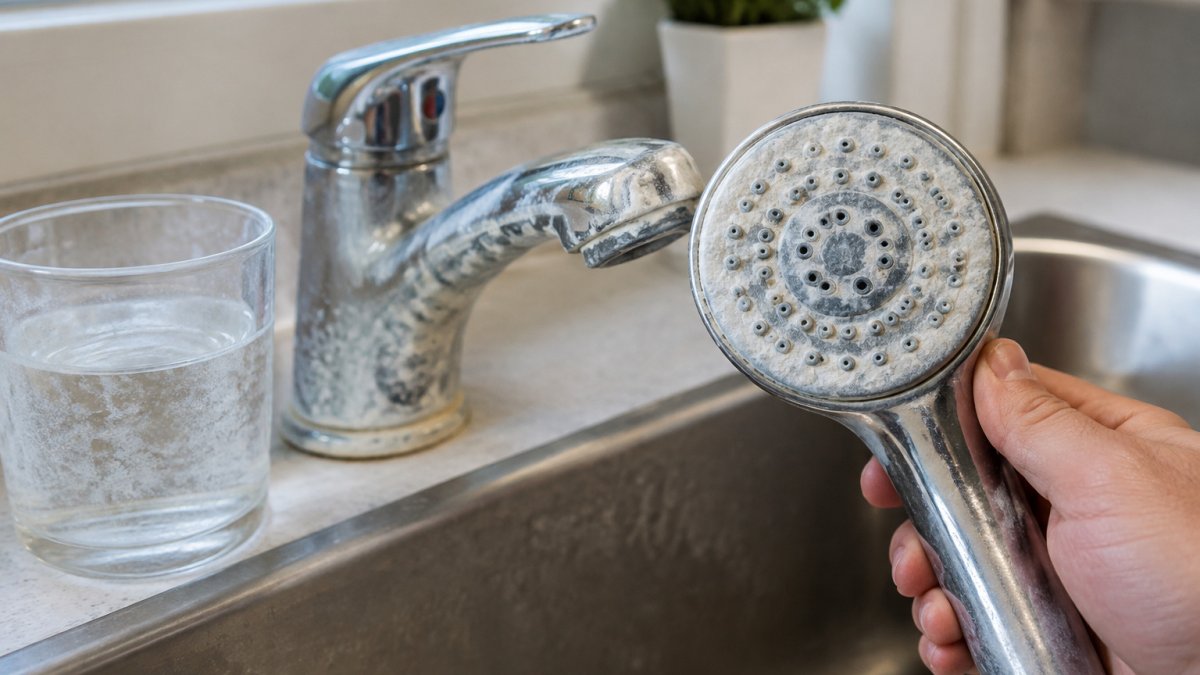
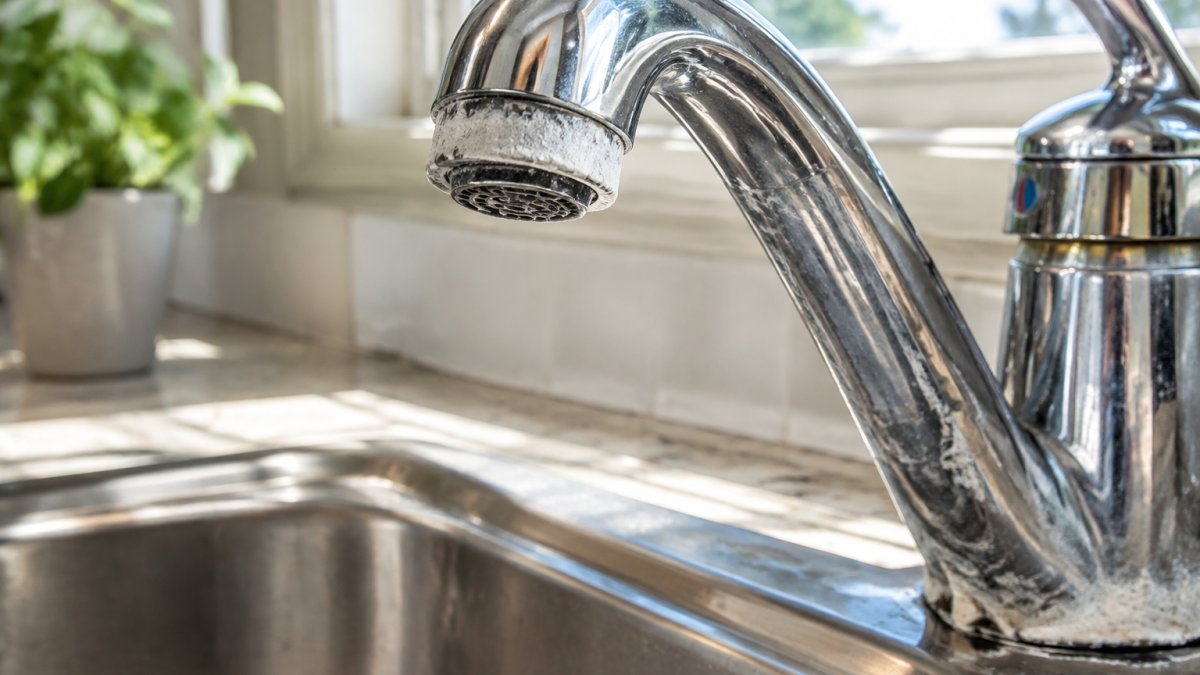
The most reliable early warning is crust. Hard water carries dissolved calcium and magnesium, and those minerals stay behind as water evaporates. You get a chalky white film on chrome, a yellowish crust around the base of the faucet, and clogged spray holes in showerheads. Angi co-founder Angie Hicks puts it plainly: "The biggest sign of hard water is white, chalky mineral buildup on faucets and shower heads" (Real Simple interview with Angie Hicks). That crust is limescale, and left alone it creeps into drain openings and reduces water flow.
Cloudy Glassware and Spotted Dishes
Pull a glass from the dishwasher and hold it to the light. A hazy film or water spots that wipe off but return are mineral deposits, not leftover detergent. The same residue shows up as spotted dishes and a dull sheen on silverware. If your glasses come out cloudy no matter which detergent you buy, the dishwasher is not the problem.
Soap Scum and Poor Lather
Hard water fights your soap. The minerals bind with soap before it can lather, so you use more shampoo, more body wash, and more laundry detergent to get the same result. The leftover reaction leaves soap scum, that gray-white film on tubs, shower doors, and sinks that resists a normal rinse. Poor lather plus stubborn soap scum is one of the clearest signs of hard water in a home.
How to Know If You Have Hard Water or Soft Water
You know you have hard water when a measured test shows elevated calcium and magnesium, not when the soap acts up. Water hardness is the concentration of dissolved minerals, primarily calcium and magnesium, expressed in grains per gallon or milligrams per liter. Soft water sits below roughly 1 grain per gallon; moderately hard water runs 3.5 to 7; very hard water climbs above 10. Those thresholds are the difference between a minor nuisance and a system that shortens appliance life.
For local context on how those minerals behave inside pipes and fixtures, see our guide to how hard water affects plumbing in Reno.
Signs of Hard Water on Skin and Hair
Dry, itchy skin and dull, dry hair are common complaints in hard-water homes, but they are the least conclusive signs on this list. The mechanism is generally understood as follows: calcium and magnesium can bind with soap so it does not rinse cleanly, leaving a residue that may feel tight and itchy. Hair behaves similarly. Mineral film coats the shaft, roughens the cuticle, and makes hair feel straw-like and look flat, especially if you color or heat-style it.
What most guides skip is that these symptoms have many other causes. Winter air, low indoor humidity, harsh sulfates, over-washing, chlorine, and existing skin conditions such as eczema or seborrheic dermatitis can all produce dry, itchy skin. Dull hair can come from product buildup, heat damage, or a styling routine that needs a clarifying wash. The way to tell the difference is pattern and location.
Severity matters here. Dry skin and dull hair are generally considered cosmetic concerns. Treat these as supporting evidence, not proof. If the crust, spots, and soap scum are already present, the skin and hair complaints fit the pattern and are worth addressing alongside the water. If they are the only symptom, rule out products, humidity, and medical causes before spending money on treatment.
A practical next step is a two-week test. Switch to a gentle, fragrance-free cleanser and a clarifying shampoo, add a humidifier if indoor air is dry, and see whether the itch and roughness ease. If they do not, and a hardness test confirms elevated minerals, a whole-house softener or a showerhead filter is a reasonable next move.
Hard Water Test: How to Measure Hardness at Home
A hard water test gives you a number, and a number settles the argument. You have three practical options:
| Method | What You Get | Best For |
|---|---|---|
| Test strips | Rough range in about a minute | Quick first check |
| Liquid drop kit | More precise grains per gallon | Confirming borderline results |
| Lab or professional test | Full mineral profile | Buying or sizing treatment |
- Test cold water from a tap that skips any filter or softener
- Run the water for 30 seconds first
- Follow the strip or kit timing exactly
- Record the number in grains per gallon
- Test a second tap to confirm
Strips are cheap and fast but coarse. If a strip reads "hard," a drop kit or professional test tells you how hard, which is what sizing a treatment system actually requires.
How to Get Rid of Hard Water in Whole House
Getting rid of hard water across a whole house means treating it where it enters, not polishing one faucet at a time. The main options fall into three groups, and they are not interchangeable.
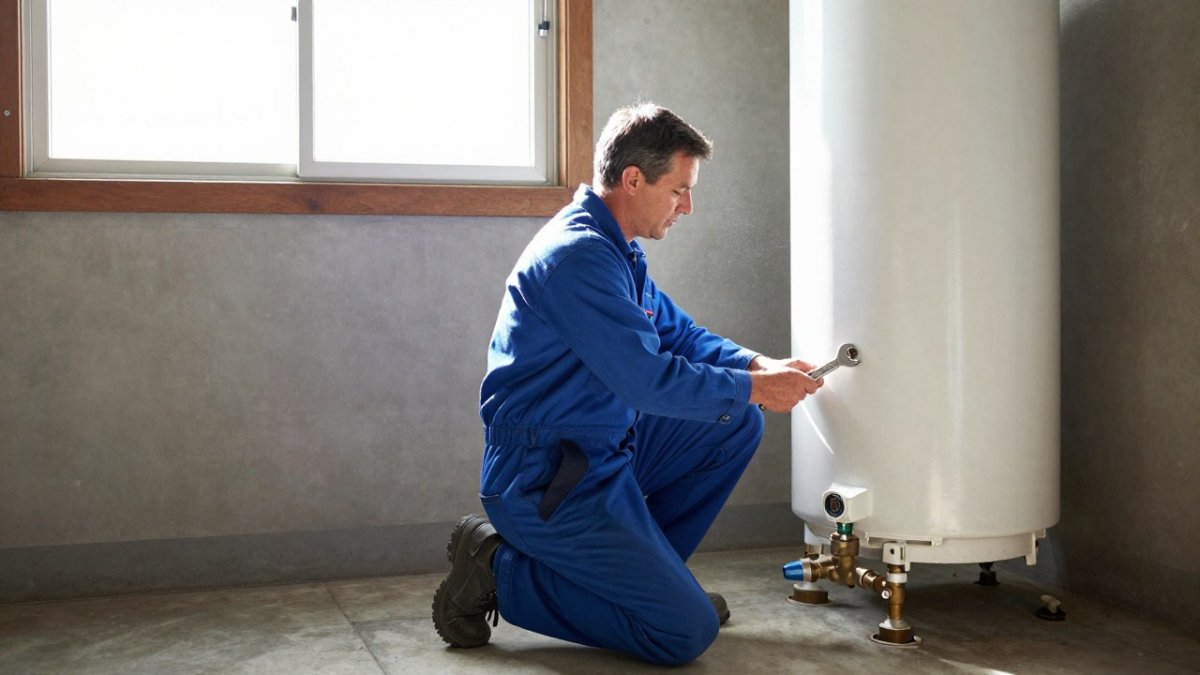
Ion-exchange water softeners remove calcium and magnesium by swapping them for sodium or potassium (the EPA). They are the only common option that actually lowers measured hardness, which is why they solve spots, scale, and soap scum together. The trade-offs are real: they need salt, a drain connection, floor space, and periodic regeneration.
Salt-free conditioners change how minerals behave so they stick less to pipes and fixtures. They cost less to run, need no salt, and take up little space, but they do not lower the measured hardness.
Point-of-use filters, including under-sink and showerhead models, treat one tap or one shower. They are useful for drinking water or a single problem fixture, but they do not protect the water heater, dishwasher, or laundry. Do not expect a shower filter to fix whole-house scale.
Severity should drive the decision. Cosmetic spotting and soap scum are a nuisance, not an emergency. Scale in the water heater, reduced flow, and repeated appliance failures are the signs that justify prompt inspection and a whole-house solution.
If you are weighing a system, read our breakdown of whole-home water treatment benefits, or explore water treatment in Reno, Nevada to see how we match equipment to your water. We also explain whether your home needs whole-house filtration.
Schedule a Water Hardness Check with Reno Plumbing Doctor
The signs point one way, but a measurement removes the doubt. Our team can test your water, explain what the numbers mean, and provide a quote before any work starts. Financing through Synchrony Financial is available for qualifying treatment systems, and our fully stocked service trucks enable on-the-spot repairs.
Schedule your water hardness check with Reno Plumbing Doctor and get a straight answer on what is in your water and what it will take to fix it.
Frequently Asked Questions
How to tell if a house has hard water issues?
Look for white, chalky buildup on faucets and showerheads, cloudy glassware, soap scum in tubs, and laundry that feels stiff. These signs of hard water in home plumbing point to calcium and magnesium. Hard water is common across U.S. homes, so the symptoms are widely seen. A water test kit or professional hardness check confirms the level before you buy treatment equipment.
What is the best way to test for hard water at home?
Start with a DIY hard water test kit from a hardware store; it measures grains per gallon (gpg) in minutes. For a more precise reading, a professional can also test your water at the tap. Record the number: under 3 gpg is soft, 3-7 is moderately hard, and above 7 is hard. That result decides the right softener size.
Can hard water affect your skin and hair?
Yes. The signs of hard water on skin include dryness, itchiness, and irritation after showering because calcium and magnesium prevent soap from rinsing cleanly. Hair can feel dull, dry, and difficult to manage. Hard water minerals can still leave residue on skin and hair.
How do you get rid of hard water throughout a house?
The most complete fix is a whole-house water softener installed at the main water line. It removes calcium and magnesium through ion exchange, stopping scale in pipes, fixtures, and the water heater. Smaller options like point-of-use conditioners reduce scale at one tap but do not soften the whole home. A hardness test first helps determine an appropriate system size for your household.