 Ultimate guide
Benefits of Whole Home Water Treatment Systems
Last Updated: November 2, 2026
Quick Summary
A whole home water treatment system installs on the main water line so every faucet, shower, and appliance receives treated water, delivering cleaner water, better taste and odor, and less mineral stress on plumbing and appliances. The gains only show up when the system matches your tested water, so test first, then size, then install.
- The home water filtration unit market was valued at $21.8 billion in 2025 and is projected to reach $23.6 billion in 2026.
- Carbon filtration reduces chlorine, chloramine, taste, and odor but is not designed to remove nitrate, arsenic, or most dissolved metals.
- Water softening removes calcium and magnesium through ion exchange but does nothing for chlorine, sediment, or microbial contaminants.
- A baseline private-well test typically covers hardness, iron, manganese, nitrate, coliform bacteria, pH, and sediment.
- Size the unit to peak household demand, not average use, so two showers and the dishwasher can run at once.
Table of Contents
- How a Point-of-Entry System Treats Every Tap
- The Core Benefits of Whole Home Water Treatment Systems
- What Whole-House Water Filtration System Cost Really Looks Like
- The Disadvantages of Whole-House Water Filters You Should Weigh
- Filtration vs. Water Softening: Matching Treatment to Your Water
- Finding the Best Drinking Water Filtration System for Home Use
- What Whole-House Water Filtration System Reviews Should Tell You
- Flow Rate, Sizing, and Installation Before You Commit
- Schedule Your Water Treatment Assessment
- Frequently Asked Questions
How a Point-of-Entry System Treats Every Tap
According to Grand View Research's home water filtration market report, the home water filtration unit market was valued at $21.8 billion in 2025 and is projected to reach $23.6 billion in 2026. That growth tracks a simple homeowner realization: treating water at one tap solves one problem, while treating it where it enters the house solves all of them. At Reno Plumbing Doctor, we field questions about whole home water treatment constantly, and the answer usually starts with how a point-of-entry system works.
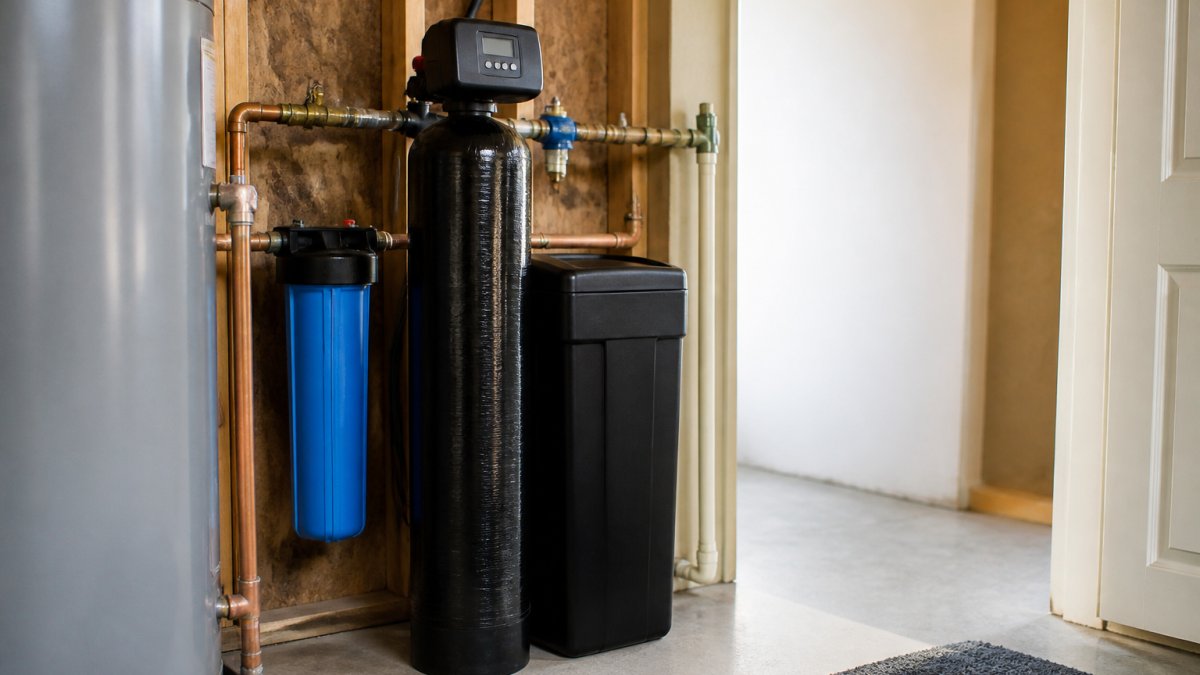
A point-of-entry system is a treatment unit installed on the main water line where it enters the home, so every faucet, shower, and appliance downstream receives treated water. For a closer look at how whole-house filtration works and whether your Reno home needs one, see Reno Plumbing Doctor. The CDC's overview of home water treatment systems describes whole-home systems as treating most or all water entering a home, which separates them from point-of-use filters that treat water at a single tap.
The benefits of whole home water treatment systems start with coverage. A point-of-entry system can treat water for the kitchen sink, the upstairs shower, the washing machine, and the water heater at the same time.
The Core Benefits of Whole Home Water Treatment Systems
Whole-home treatment delivers cleaner water at every outlet, better taste, and less mineral stress on plumbing and appliances. The gains compound because the system works continuously rather than only when someone fills a glass.
Cleaner Water at Every Faucet and Shower
Chlorine, sediment, and particulate matter reach more than your drinking glass. They hit the shower, the laundry, and every fixture in the house. A whole-house water filtration system addresses that at the source, reducing chlorine and chloramine along with dirt and sediment before they travel through the pipes.
A study published through PubMed Central on home water purification effectiveness found that home water purifiers nearly eliminated fluoride from tap water, which shows how much a properly matched filter media can remove. The lesson is not that every system strips everything. It is that filter selection determines what comes out.
Better Taste and Odor in Drinking and Cooking Water
Taste and odor complaints usually trace back to chlorine and organic compounds. Carbon-based filtration in a point-of-entry system reduces both, so drinking water and cooking water taste cleaner without a pitcher in the fridge.
That matters more than it sounds. People cook with, rinse produce in, and make coffee from the same water they drink. Treating all of it removes the guesswork.
Softer Skin, Cleaner Hair, and Less Scale Buildup
Hard water leaves mineral deposits on fixtures, water spots on glass, and scale buildup inside the water heater. Calcium and magnesium are the culprits, and they also leave skin dryness and dull hair after showering.
Filtration alone does not fix hardness. That takes a water softener, which is why matching treatment to your water matters. For a closer look at how hardness affects pipes and fixtures, see our guide on how hard water affects your plumbing.
What Whole-House Water Filtration System Cost Really Looks Like
Whole-house water filtration system cost depends on the system type, the contaminants being targeted, household size, and installation complexity. There is no single number, and any quote that arrives before a water test is a guess.
Reno Plumbing Doctor uses Up-Front Menu Pricing, so you see exact costs before work begins. Financing through Synchrony Financial is available.
Three cost drivers dominate:
- System type: carbon filtration, softener, or a combined unit
- Sizing: flow rate must match household demand
- Installation: existing plumbing, space, and electrical access
Ask for the total ownership picture, including filter replacement and maintenance, not just the install price.
The Disadvantages of Whole-House Water Filters You Should Weigh
The disadvantages of whole-house water filters are real, and the honest ones are not about whether the system works, they are about whether it works on your water. Upfront cost runs higher than a single point-of-use filter, and filter media needs scheduled replacement.
The bigger limitation is performance. Whole-home systems are built around specific technologies, and each technology has a narrow target list:
- Carbon filtration reduces chlorine, chloramine, taste, and odor compounds, along with some volatile organic chemicals. It is not designed to remove nitrate, arsenic, or most dissolved metals.
- Water softening removes calcium and magnesium through ion exchange. It does nothing for chlorine, sediment, or microbial contaminants, and it adds sodium to the water in exchange for hardness minerals.
- Sediment filtration captures dirt, rust, and particulate matter but leaves dissolved contaminants untouched.
- Reverse osmosis removes a broad range of dissolved contaminants but is typically point-of-use because it wastes reject water and produces flow too slow for whole-house demand.
That is why the phrase "reduction" matters more than "removal." A system certified to reduce a contaminant by a stated percentage is not the same as one that eliminates it, and the difference is written into the certification. The NSF guidance on home water treatment systems separates whole-home from point-of-use units for exactly this reason: neither type addresses every contaminant equally, and a system built for chlorine reduction will not necessarily handle arsenic or nitrates.
Watch out: buying on the strength of a general "filters contaminants" claim without checking the certified contaminant list can leave the one thing in your water that matters untreated.
| Disadvantage | What It Means | How to Manage It |
|---|---|---|
| Higher upfront cost | Full system plus installation | Compare lifecycle cost, not sticker price |
| Maintenance schedule | Filter media replacement | Set calendar reminders |
| Contaminant limits | Not every filter targets everything | Test water first, then match |
| Installation space | Utility room or garage footprint | Confirm placement before purchase |
| Pressure drop | Undersized units restrict flow | Size to peak demand, not average use |
| Bypass complexity | Some systems need a bypass for maintenance | Confirm bypass valve is included |
The practical takeaway is not to avoid whole-home treatment. It is to treat the disadvantages as selection criteria. Test first, confirm the certified contaminant list matches your results, and size the unit to peak household demand so the system does not become a daily annoyance.
Filtration vs. Water Softening: Matching Treatment to Your Water
Filtration and softening solve different problems, and confusing them is the most common mistake we see. Filtration removes contaminants like chlorine, sediment, and particulate matter. Softening removes hardness minerals, calcium and magnesium, that cause scale. Some homes need both; a softener protects the water heater and appliances, while carbon filtration improves taste and reduces chlorine. Installing one and expecting the other's results leads to disappointment.
The part most benefit-focused guides skip is the step before the purchase: reading your water. Municipal water and well water present different profiles, and treatment should follow the test results rather than a sales pitch. Because test results should determine the treatment, well water treatment begins with understanding which contaminants are actually present.
Reading a municipal water report. Many community water systems publish a consumer confidence report, and the useful numbers are the detected contaminants, their levels, and the regulatory limits they are compared against. Look for chlorine or chloramine residual, hardness reported as grains per gallon or milligrams per liter, and any detected contaminants flagged near a limit. A report showing moderate hardness and a chlorine residual points toward softening plus carbon; a report showing low hardness and no flagged contaminants may need only carbon for taste and odor.
Reading a private-well test. Well water has no utility report, so testing is the only source of truth. A baseline panel typically covers hardness, iron, manganese, nitrate, coliform bacteria, pH, and sediment. Iron and manganese stain fixtures and clog media; nitrate has no taste or odor and requires a technology like reverse osmosis or ion exchange rather than carbon; coliform signals a disinfection problem that treatment alone may not solve.
Matching contaminants to technology. Once the results are in, the mapping is straightforward:
- Hardness (calcium and magnesium) → water softener
- Chlorine and chloramine → catalytic carbon, with chloramine requiring specifically rated media
- Sediment, rust, and particulate → sediment prefilter
- Nitrate → reverse osmosis or selective ion exchange
- Iron and manganese → oxidation plus filtration or specialized media
A combined setup makes sense when the test shows both hardness and a contaminant carbon can address, which is common in homes on treated municipal supply. In that case the softener and carbon unit are often installed in series, with the sediment prefilter ahead of both to protect the media.
Watch out: sizing the softener and the filter independently without checking total pressure drop across the series can leave the shower weak even though each unit is correctly rated on its own.
Start with water testing, map the results to technology, and let the test decide whether you need filtration, softening, or both.
Finding the Best Drinking Water Filtration System for Home Use
The best drinking water filtration system for home use is the one matched to your tested water quality, household size, and flow rate needs. That answer frustrates people looking for a single product name, but it is the honest one.
Verify claims through independent certification. Certification bodies test contaminant reduction against published standards, and a manufacturer's marketing language is not the same thing.
A practical checklist before you buy:
- Get your water tested for hardness, chlorine, and sediment
- Confirm the system's certified contaminant list matches your results
- Check flow rate against your household's peak demand
- Ask for filter replacement cost and frequency in writing
- Confirm installation requirements and warranty terms
What Whole-House Water Filtration System Reviews Should Tell You
Whole-house water filtration system reviews are most useful when they cover installation experience, maintenance reality, and long-term performance, not just the first week. A review that never mentions filter replacement costs or flow rate complaints is incomplete.
Read for patterns. If multiple reviewers mention pressure drops, that signals a sizing problem. If maintenance complaints cluster, the system may demand more attention than advertised.
Weigh reviews against your own water test. A system that performs well on soft municipal water may struggle with heavy sediment from a private well.
Flow Rate, Sizing, and Installation Before You Commit
Sizing determines whether you notice the system at all. An undersized unit restricts flow rate, and reduced water pressure at the shower is the first complaint homeowners report. Peak household demand, not average use, drives the sizing calculation.
Installation involves cutting into the main line, so placement matters. Utility rooms and garages are common locations, and electrical access may be needed for certain systems.
Watch out: skipping a professional sizing assessment is the mistake that turns a good system into a daily annoyance. A unit rated for a small household will choke when two showers and the dishwasher run at once.
Schedule Your Water Treatment Assessment
The benefits of whole home water treatment systems are real, but they only show up when the system matches your water. Testing first, then sizing, then installation is the order that works.
Reno Plumbing Doctor offers Up-Front Menu Pricing, fully stocked service trucks, and financing through Synchrony Financial. Water treatment services include assessment, sizing, and installation. Review our water treatment services or schedule plumbing service to get started.
Cleaner water at every tap is a reasonable expectation. Treated water can show up in taste, appliance lifespan, and scale buildup inside the water heater. Reno Plumbing Doctor brings Up-Front Menu Pricing, fully stocked trucks for same-visit work, and Synchrony Financial financing to make the installation manageable. Schedule your water treatment assessment with Reno Plumbing Doctor and get water that tastes right from every faucet in the house.
Frequently Asked Questions
Is it worth it to get a whole house water filtration system?
It depends on what is in your water. A whole home water treatment system makes sense when testing shows sediment, chlorine, chloramine, or hardness affecting every tap, since a single point-of-entry unit treats the whole supply. Many homeowners want cleaner water at every faucet. Test first, then match the system to the contaminants you actually have.
What are the disadvantages of a whole house water filter?
The main drawbacks are upfront cost, ongoing filter replacement, and the fact that one system does not remove every contaminant. A carbon filter handles chlorine and taste but not hardness minerals, so hard water still needs a softener. Some systems reduce flow rate if undersized, and installation can require plumbing changes. Treatment should match the specific water concern, so a whole-home unit is not automatically the right answer for every household.
How much should I pay for a whole-home water treatment system?
Pricing depends on the system type, household size, water hardness, and installation complexity, so there is no single figure that fits every home. Factors that move the number include whether you add softening, the flow rate your home needs, and any plumbing modifications. Reno Plumbing Doctor uses Up-Front Menu Pricing so you see exact costs before work begins, and financing through Synchrony Financial is available.
What is the difference between a whole-house filter and a water softener?
A whole-house filter removes sediment, chlorine, and other contaminants from all the water entering your home, while a water softener specifically targets calcium and magnesium that cause hard water, scale buildup, and water spots. Many homes need both: filtration for water quality and softening for hardness. Point-of-entry systems treat most or all incoming water, while point-of-use filters treat water at a single tap, so choosing depends on whether your concern is contaminants, hardness, or both.
What contaminants can a whole-house water treatment system remove?
What it removes depends on the filter media. Carbon-based systems reduce chlorine, chloramine, taste, and odor, while sediment filters catch dirt and particulate matter. Some systems also target specific contaminants like lead or volatile organic compounds. Performance varies widely by filter technology. Check the system's certification and contaminant list against your water test results before buying.
Does a whole-house water filter improve water taste and odor?
Yes, in most cases. Carbon filtration is the standard method for reducing chlorine and chloramine, which are the most common causes of off-tasting and smelly tap water. Because a point-of-entry system treats all the water entering the home, the improvement shows up in drinking water, cooking water, and every shower, not just one faucet. If taste and odor are your main concern, a carbon whole-house filter is usually the most direct fix.