 How-to
7 Ways to Prevent Frozen Pipes in Reno Winter
Last Updated: November 12, 2026
Quick Summary
Preventing frozen pipes in Reno winter means insulating exposed pipes in the garage, attic, and crawl space, sealing drafts around exterior walls and foundation gaps, and disconnecting garden hoses. Set your thermostat to one steady temperature day and night, open cabinet doors under sinks on exterior walls, and drip the faucets during hard freezes.
- Temperatures in the 20s are enough to put your plumbing at risk.
- Keep your thermostat at 65 degrees Fahrenheit or higher, day and night.
- Never thaw a frozen pipe with boiling water or an open flame.
- Disconnect garden hoses and shut off exterior water lines using the indoor valve.
- Open cabinet doors under sinks on exterior walls so warm air reaches the pipes.
Table of Contents
- Preventing Frozen Pipes in Reno Winter: Start Before the First Freeze
- How to Keep Pipes From Freezing on Outside Wall in Winter
- Minimum Temperature to Keep Pipes From Freezing in Winter
- Frequently Asked Questions
Preventing Frozen Pipes in Reno Winter: Start Before the First Freeze
Preventing frozen pipes in Reno winter starts with one hard fact: temperatures in the 20s are enough to put your plumbing at risk, according to Houston Public Media's winter storm reporting. At Reno Plumbing Doctor, most cold-snap failures trace back to work you can do before the first freeze.
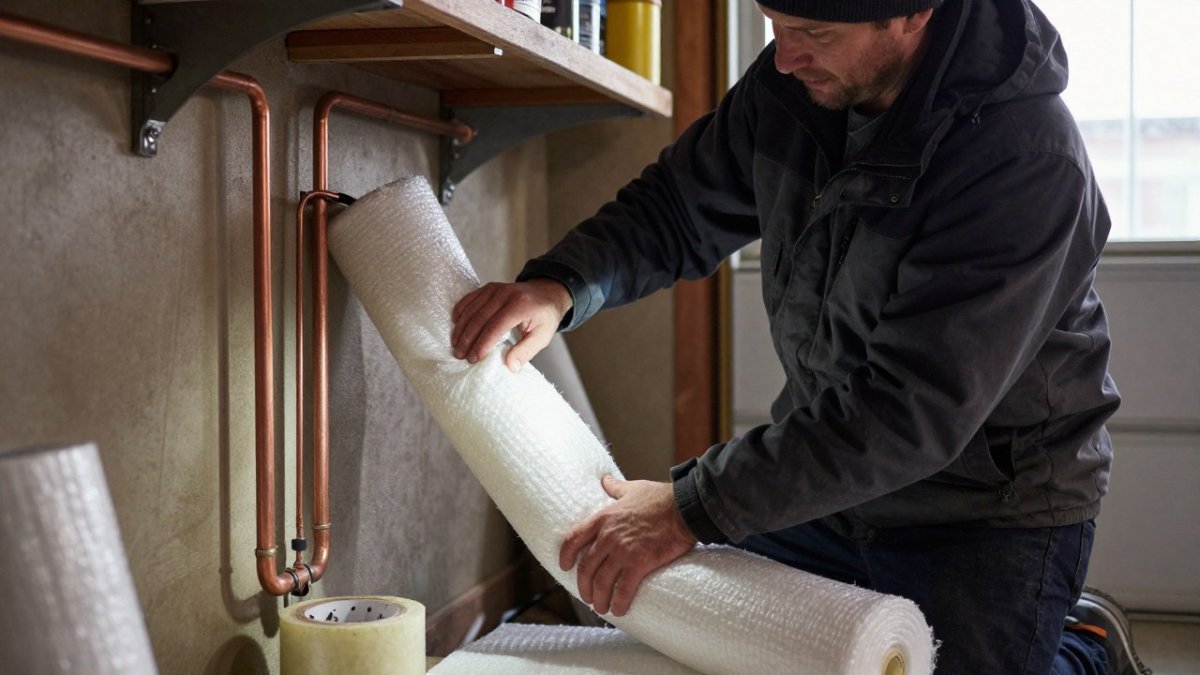
Do these six steps first:
- Insulate exposed pipes in the garage, attic, and crawl space with foam sleeves or pipe wrap.
- Seal drafts around exterior walls, vents, and foundation gaps with caulk or expanding foam.
- Disconnect garden hoses and shut off exterior water lines using the indoor valve, a step State Farm's winter guidance lists as a primary safeguard.
- Set the thermostat to one steady temperature, day and night, as the American Red Cross recommends for winter storm prep.
- Open cabinet doors under sinks on exterior walls so warm air reaches the pipes.
- Drip the faucets during hard freezes. Even a trickle keeps water moving and above the freezing point.
For a full walkthrough, read our guide to winterizing your home against frozen pipes.
Here are the six prep steps to complete before the first freeze.
| Step | What to do |
|---|---|
| 1 | Insulate exposed pipes in garage, attic, and crawl space |
| 2 | Seal drafts around exterior walls, vents, and foundation gaps |
| 3 | Disconnect garden hoses and shut off exterior water lines |
| 4 | Set thermostat to one steady temperature, day and night |
| 5 | Open cabinet doors under sinks on exterior walls |
| 6 | Drip the faucets during hard freezes |
How to Keep Pipes From Freezing on Outside Wall in Winter
The answer is insulation plus airflow: wrap outside-wall pipes with insulation sleeves, seal gaps where they pass through the wall, and leave cabinet doors open so indoor heat reaches them. If a pipe has already frozen or burst, our leak detection service in Reno finds hidden damage fast, and we handle pipe repair and installation.
Minimum Temperature to Keep Pipes From Freezing in Winter
Keep your thermostat at 65 degrees Fahrenheit or higher, the minimum Chubb recommends for outbuildings and second homes and a safe floor for any home. Hold that setting day and night, even when you travel.
Watch out: never thaw a frozen pipe with boiling water or an open flame. Utah State University Extension flags both as serious fire and burn hazards.
If a pipe freezes despite your prep, our guide on what to do in a plumbing emergency covers shutting off the water and limiting damage. To stop worrying about freeze risk, book a local plumber to inspect and winterize your system before the next cold front.
Reno winters test your plumbing every year, and the fixes above handle most of it. When you want a pro to check the work, Reno Plumbing Doctor offers up-front menu pricing, fully stocked service trucks for on-the-spot repairs, and financing through Synchrony Financial. Get started with Reno Plumbing Doctor and protect your home before the first freeze.
Frequently Asked Questions
What temperature should your house be to avoid freezing pipes?
Keep your thermostat at 65 degrees Fahrenheit or higher day and night, even when you are away. The American Red Cross recommends a consistent setting rather than lowering it overnight, because pipes in exterior walls and crawl spaces cool faster than the rooms you feel. For outbuildings and second homes, Chubb sets the same 65-degree minimum. Temperatures in the 20s are enough to trigger freezing risk, so do not wait for single digits to act.
Should you leave cabinet doors open to prevent frozen pipes?
Yes, on exterior walls. Opening cabinet doors under sinks lets warm room air reach the supply lines, which is often the difference between a trickle and a burst. Pair it with a pencil-thin faucet trickle on the coldest nights; running water, even at a trickle, keeps the water temperature above freezing according to the American Red Cross. Clear the cabinet first so nothing blocks the airflow.
What should I do if my pipes are already frozen?
Shut off the water main first, then thaw slowly with a hair dryer, heat lamp, or wrapped towels soaked in warm water, working from the faucet end back toward the frozen section. Never use boiling water or an open flame; Utah State University Extension flags both as serious burn and fire hazards. If you cannot find the freeze point or a pipe has already split, call a licensed plumber before restoring water pressure.