 How-to
Are Plumbers Hiding Fees in Your Quote?
Last Updated: November 1, 2026
Quick Summary
Avoiding hidden fees in plumbing quotes starts with reading the scope of work before the price, because vague estimates like "repair leak" hide what the plumber will actually do. Ask whether the diagnostic fee is separate and non-refundable, and require a written, itemized estimate before work begins. Set a stop-and-ask rule so no extra work happens without your written approval.
- A plumber diagnostic fee covers the trip, inspection, and assessment, not the repair itself.
- Service, call-out, and after-hours charges are three different fees, so ask about each up front.
- The final invoice must reference the approved change order and match its price.
Table of Contents
- Why Hidden Fees Show Up in Plumbing Quotes
- The Plumber Diagnostic Fee: What You Pay Before Work Starts
- Your Plumbing Estimate Checklist for a Complete Written Quote
- Questions to Ask a Plumber Before Hiring
- Plumbing Change Order Approval: Controlling Extra Work
- Schedule Your Up-Front Priced Plumbing Visit
- Frequently Asked Questions
Why Hidden Fees Show Up in Plumbing Quotes
Many homeowners focus on the total at the bottom of a plumber's estimate.
Hidden charges usually come from vague estimates. A quote that says "repair leak" tells you nothing about how far the plumber will go.
Up-front pricing, where the exact cost shows before work begins, should be the normal standard, not the exception.
Here is what most guides miss: the fee itself is rarely the problem. The missing detail behind it is.
The Plumber Diagnostic Fee: What You Pay Before Work Starts
A plumber diagnostic fee is the charge for finding the problem, not fixing it. This fee covers the trip, the inspection, and the professional assessment of what is wrong.
Some providers fold this into the repair cost; others bill it separately. Ask which applies before you book.
Service, Call-Out, and After-Hours Charges
These three charges often get mixed together. They are not the same:
- Service fee: covers the visit and basic assessment
- Call-out fee: covers travel to your home
- After-hours rate: applies to nights, weekends, and holidays
A minimum charge may also apply, meaning you pay a set amount even if the job takes ten minutes. Ask about travel costs and weekend surcharges up front.
Your Plumbing Estimate Checklist for a Complete Written Quote
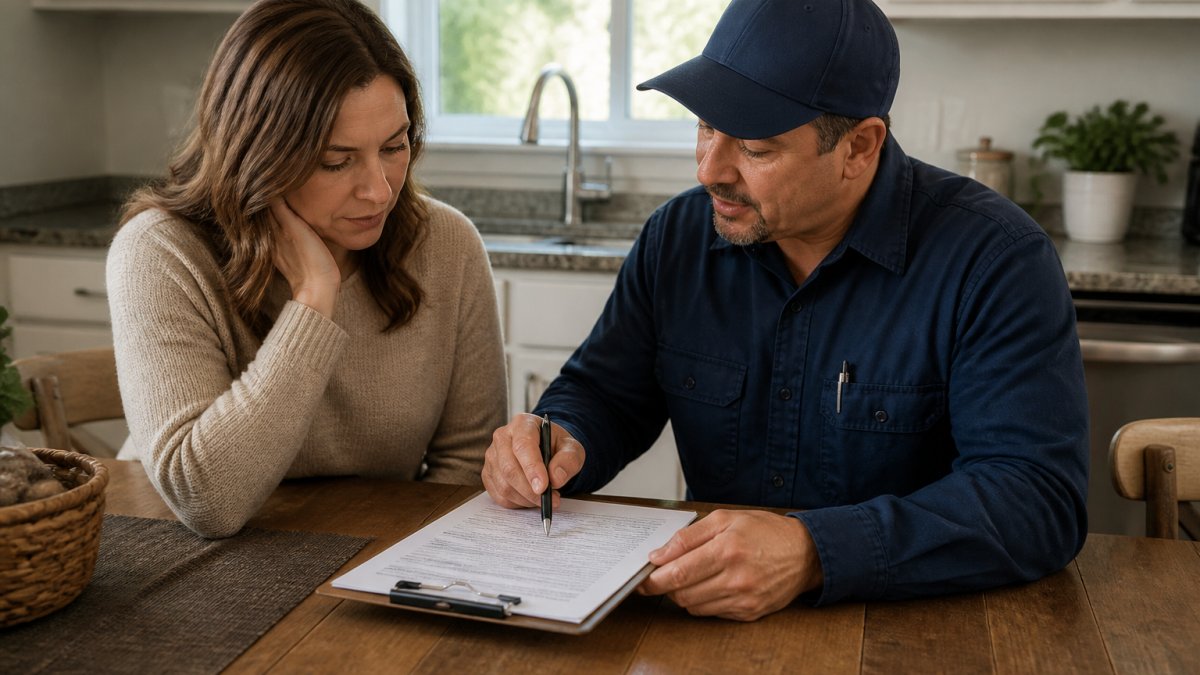
A complete plumbing estimate checklist protects you from surprise charges. Use it before you sign anything. A written estimate should state the scope of work, parts, labor, and payment terms in plain language.
Reading an Itemized Quote Line by Line
An itemized quote breaks the job into separate lines. That is exactly what you want. Here is what each line should tell you:
- Labor: the hourly rate or fixed price, and the hours expected
- Materials and parts: named items, not "miscellaneous"
- Permits and taxes: listed separately, not buried
Watch out: a single lump-sum line with no breakdown is where unexpected costs breed. If a quote will not show its parts, treat that as a warning.
What a Real Itemized Quote Looks Like
Most guides tell you to demand an itemized quote and stop there. The harder skill is reading one.
Legitimate itemized quote (annotated):
Line item | Detail shown | Why it matters |
|---|---|---|
Diagnostic / assessment | Flat fee, disclosed before visit, credited toward repair if approved | Confirms whether the fee is refundable or applied to the job |
Removal and disposal | Old unit hauled away, disposal fee listed separately | Prevents a surprise "disposal" add-on at invoice |
Equipment | Brand, model number, capacity, and warranty term named | Lets you price-check the unit and confirm the warranty |
Labor | Hourly rate × estimated hours, or fixed installation price | Shows whether the quote is time-and-materials or fixed |
Permits | Stated as included or excluded, with the authority named | Permit costs are commonly passed through; you want to know upfront |
Code upgrades | Expansion tank, pan, shutoff, or venting listed as separate lines | These are the most common "while we're in there" additions |
Cleanup | Stated as included | Avoids a cleanup charge on the final invoice |
Payment terms | Deposit amount, progress payment, balance due on completion | Ties payment to milestones, not to the calendar |
The same job written vaguely:
"Replace water heater, $2,400. Additional parts and labor as needed."
That single line hides four decisions: which unit you are getting, whether the permit is included, whether code upgrades are covered, and what "as needed" is allowed to cost. It is not necessarily dishonest, but it gives you nothing to hold the final invoice against.
Spotting Duplicated and Padded Line Items
Even itemized quotes can carry quiet padding. A few patterns are worth checking before you approve:
- The same cost under two names. A "trip charge" and a "diagnostic fee" on the same quote are often one charge billed twice. Ask which applies.
- "Miscellaneous" or "shop supplies" as a percentage. A small supplies line is normal in some trades; an uncapped percentage-of-job charge is not.
- Labor hours that exceed the scope. If the quote lists six hours for a job described as a two-hour repair, ask what the extra time covers.
A quote is only as useful as the detail behind it. The checklist tells you what to look for; the annotated example shows what good looks like.
Questions to Ask a Plumber Before Hiring
The best time to stop hidden fees is before the truck arrives. These questions to ask a plumber before hiring take two minutes and save real money:
- Is the diagnostic fee separate, and is it non-refundable?
- Will I get a written, itemized estimate before work starts?
- What triggers additional work, and who approves it?
Get it in writing. A verbal promise about pricing is not a contract. You can review the full range of plumbing services on our website before you call.
Plumbing Change Order Approval: Controlling Extra Work
Plumbing change order approval is the process for signing off on work not in the original quote. A pipe that looked fine on the surface can be corroded underneath.
Set the rule before work begins: no extra work without your written or verbal approval, and no charge without a revised price.
Ask for the new cost in writing. You can also check the money saving coupons to factor savings into your comparison. If the added work strains your budget, financing options through Synchrony Financial may help spread the cost.
The Pre-Approval Process, Step by Step
A verbal "go ahead" is hard to enforce when the invoice arrives. A simple written process closes that gap. Agree on these four steps before work starts and put them in the contract or quote:
- Stop-work rule. The plumber must pause the moment the scope changes, a discovered leak, a cracked fitting, a code issue behind the wall, and not proceed until you respond.
- Written change order. The plumber provides a short written description of the added work, the reason, the revised price, and the new completion estimate. A text or email counts; a phone call does not.
- Your approval in writing. You reply in writing (text, email, or signed change order) before any added work begins. Keep the message.
- Revised invoice tie-back. The final invoice must reference the approved change order and match its price. If it does not, you have documentation to dispute it.
What a Change Order Should Contain
A usable change order is short but specific. It should state:
- The original scope and price
- The added work, described in plain terms
- The reason the added work was not foreseeable from the original inspection
If a plumber resists putting added work in writing, that tells you how the final invoice will likely be handled.
Payment Safeguards and Disputes
Change orders and payment terms work together. A few safeguards keep the final invoice aligned with what you approved:
- Keep the deposit modest and tied to a milestone. A deposit that covers materials is normal; a large upfront payment with no milestone is not.
- Pay in stages on larger jobs. Tie progress payments to completed, inspected work rather than to dates.
- Keep every receipt and the approved quote. If the final invoice differs from the approved quote plus change orders, you have the paper trail to challenge it.
A change order is not paperwork for its own sake. It keeps the price you agreed to and the price you pay the same number.
Schedule Your Up-Front Priced Plumbing Visit
You should never have to guess what a repair will cost. The right provider shows you the price before work starts, in writing, with no surprises at the invoice.
At Reno Plumbing Doctor, we built our service around that idea. Our Up-Front Menu Pricing gives you exact costs before any work begins. You can schedule online to book a visit.
Frequently Asked Questions
Do plumbers charge for a consultation or estimate?
Many plumbers charge a diagnostic or service fee to come out and assess the problem, and that fee often covers travel and the first portion of inspection time. Some apply it toward the repair if you book the work. Ask two things before you schedule: whether the visit fee is refundable or credited, and whether a written estimate is free after the diagnosis. Get both answers in writing so the charge does not appear as a surprise on your invoice.
How can I tell whether a plumbing quote includes all fees?
Check for five things: an itemized labor and materials breakdown, the diagnostic fee stated separately, permit costs, disposal or haul-away charges, and payment terms including any deposit. A complete quote also lists the scope of work and what happens if the job expands. If a quote is a single lump sum with no line items, ask for the breakdown before you sign. Use a plumbing estimate checklist and compare every quote against the same list.
Can a plumber charge more than the quoted price?
A plumber should not charge more than the quoted price without your approval. Reputable companies use a change order approval process: if the job reveals a cracked fitting or hidden corrosion, you get a written revised price and sign off before work continues. Ask upfront how extra work is approved and who authorizes it. Keep the original quote, any change orders, and the final invoice so you can compare what was agreed against what was billed.
Is it normal for a plumber to charge a diagnostic fee?
Yes. A plumber diagnostic fee is standard practice because diagnosing a problem takes time, tools, and travel. What matters is transparency: the fee should be disclosed when you book, stated on the invoice, and explained in terms of what it covers. Ask whether the fee is credited toward the repair, whether after-hours or weekend rates apply, and whether there is a minimum charge. A company with up-front menu pricing will tell you the exact fee before anyone arrives.
Stop guessing at the invoice. Get started with Reno Plumbing Doctor and see the exact price before we turn a single wrench.