 how-to
How to Find Why Your Water Heater Is Leaking
Last Updated: October 28, 2026
Quick Summary
A water heater leaking is diagnosed by finding where the water comes from: a wet tank bottom often means the metal has rusted through and can't be patched, while a top leak is usually a loose fitting or bad valve that is often fixable. Shutting off a leaking water heater takes about two minutes and limits water damage.
- Turn off the water at the cold-water inlet valve on top of the tank, then cut the power or gas.
- Never cap or plug a pressure relief valve; a leaking relief valve is a warning.
- Flush the tank yearly to clear sediment and test the relief valve every six months.
- Homes with hard water need more frequent flushing because minerals build up faster.
- Never leave the power on to a draining tank, since a dry heating element can burn out in seconds.
Table of Contents
- Why Is My Water Heater Leaking? Start With the Leak Location
- Water Heater Leaking From Bottom: Tank Failure or Loose Parts
- Water Heater Pressure Relief Valve Leaking: What It Signals
- How to Shut Off a Leaking Water Heater Before Damage Spreads
- Water Heater Repair or Replacement: How to Decide
- Preventing the Next Leak: Routine Maintenance That Works
- Frequently Asked Questions
Why Is My Water Heater Leaking? Start With the Leak Location
If your water heater is leaking, first find where the water is coming from. Check the top, bottom, and sides of the unit.
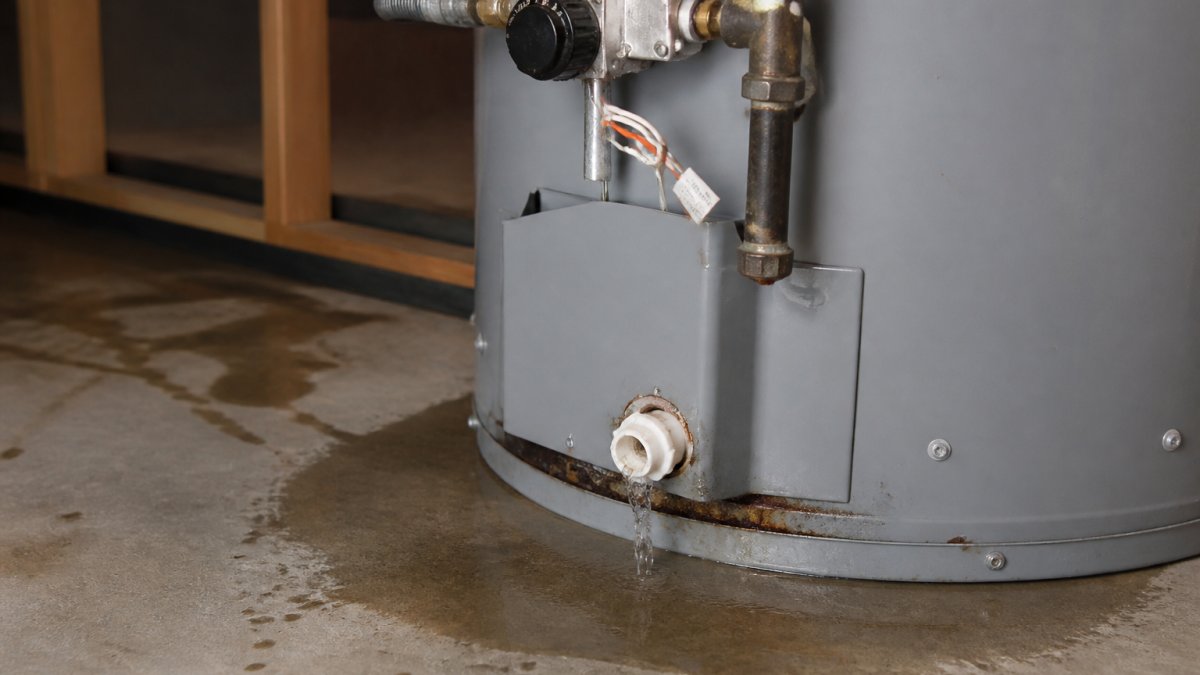
Water pooling near the base is the most serious sign: a wet tank bottom often means the metal has rusted through and can't be patched. A top leak is usually a loose fitting or bad valve, often fixable. The U.S. Department of Energy guide to water heating explains how tanks are built and why the inner lining matters. If you want a pro to trace it, our team handles water heater repair in Reno, Nevada and can stop the leak before it spreads. You can also schedule a plumbing service visit and get exact pricing before any work starts.
Water Heater Leaking From Bottom: Tank Failure or Loose Parts
See our guide on the signs your water heater needs repair and tips to keep your water heater running efficiently.
Water Heater Pressure Relief Valve Leaking: What It Signals
A water heater pressure relief valve leaking is a warning, not a nuisance. Never cap or plug a relief valve. Professional leak detection in Reno, Nevada.
How to Shut Off a Leaking Water Heater Before Damage Spreads
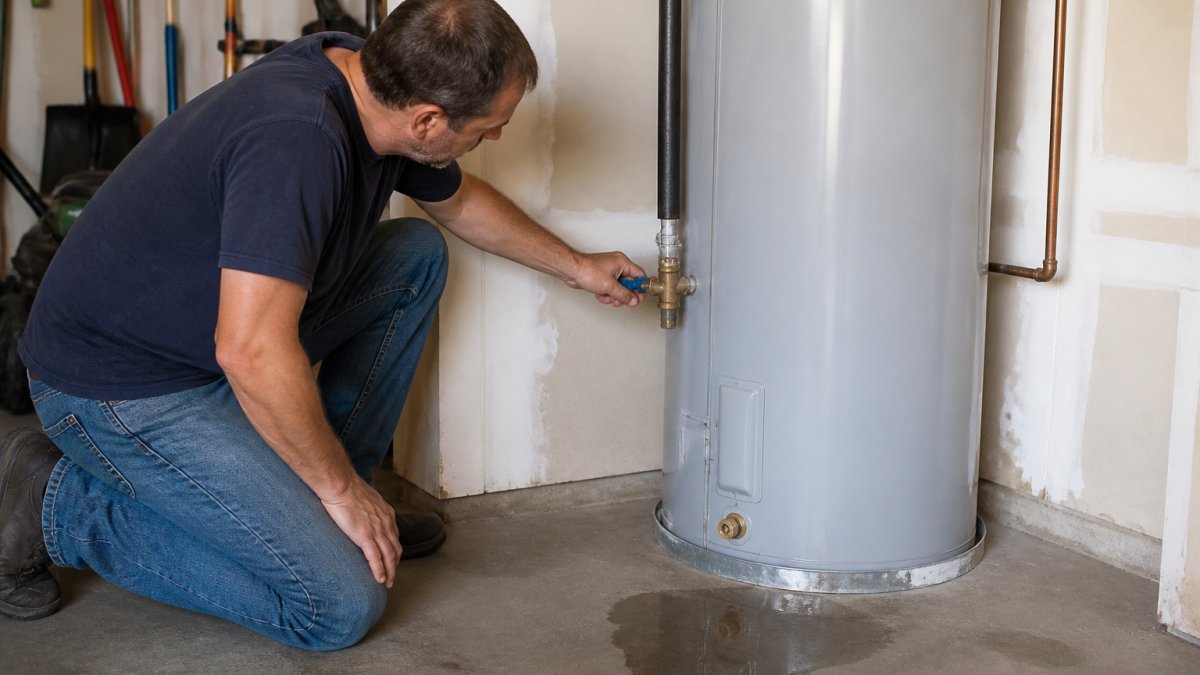
Shutting off a leaking water heater takes about two minutes and limits water damage. Turn off the water at the cold-water inlet valve on top of the tank, cut the power or gas, and open a hot tap nearby to drain pressure. Gas: knob to "off" or "pilot." Electric: flip the breaker. Tankless: close the cold-water isolation valve and cut power at the breaker. Never leave the power on to a draining tank, a dry heating element can burn out in seconds.
Water Heater Repair or Replacement: How to Decide
Choosing between water heater repair or replacement depends on the leak source, the unit's age, and the cost of the fix.
| Leak Location | Likely Cause | Best Move |
|---|---|---|
| Top fittings | Loose connection | Repair |
| Relief valve | Worn valve or high pressure | Repair valve, check pressure |
| Tank bottom or seam | Internal corrosion | Replace |
We offer Up-Front Menu Pricing so you see the exact price before work begins, plus flexible financing through Synchrony Financial.
Preventing the Next Leak: Routine Maintenance That Works
Most water heater leaks are preventable, and routine maintenance is the cheapest insurance you can buy. Flush the tank yearly to clear sediment, test the relief valve every six months, check pipe connections for drips, watch for seam rust, and have a pro inspect the unit as it ages. Hard water speeds up mineral buildup, so homes with hard water need more frequent flushing. The EPA guidance on water quality and hardness explains what is in your water and why it matters. As the CDC notes on water heater safety point out, proper temperature settings also protect your household.
Frequently Asked Questions
Can I still shower if my water heater is leaking?
Only if the leak is minor and the unit still holds pressure, and even then it is a short-term fix. A leaking water heater can fail suddenly, and water near electrical connections or a gas burner creates a real hazard. Shut off the water supply and power or gas first, then shower elsewhere until a plumber inspects it. If water is pooling near the base or the tank itself is wet, stop using it immediately.
Why is my water heater leaking from the bottom?
A water heater leaking from bottom usually means one of three things: a loose drain valve, a failing fitting where the pipes enter the tank, or internal tank corrosion. Wipe the tank dry and watch where water returns. Water seeping from the seams or the metal tank itself points to internal failure, which means replacement rather than repair. Water at the drain valve or a connection is often a simple tightening or part swap.
Can a leaking water heater be repaired, or does it need to be replaced?
It depends on where the leak starts. Loose fittings, drain valves, and pressure relief valves are repairable, and so is a relief valve leaking because of high water pressure or a failed valve. A tank that is corroded or leaking through its seams cannot be repaired, since the metal itself has deteriorated. Age matters too: a tank near the end of its expected lifespan is usually better replaced than patched.
A leaking water heater is stressful, but you do not have to face it alone. At Reno Plumbing Doctor, we find the leak, explain your options, and give you exact pricing before any work starts. Our fully-stocked trucks mean many repairs happen on the spot, and financing through Synchrony Financial makes bigger jobs easier to manage. Get started with Reno Plumbing Doctor and stop the leak before it causes real damage.